

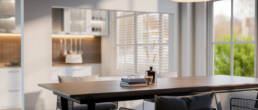
Homeowners across Tampa and St. Petersburg are rethinking how their windows and lighting work together. Rather than treating shades and lighting as two separate purchases, more homeowners are looking for systems that operate as one connected experience, controlled from a phone, a wall panel, or a voice command. At RIT Window Treatments, we design and install Lutron motorized shades and lighting control systems that work together to create homes that feel effortless to live in. This guide walks through why Tampa Bay homeowners are moving toward smart shades and lighting, how the two systems work together, what to look for in a fabric and installer, and what to consider before starting a project of your own.
Why Tampa Bay Homeowners Are Choosing Smart Shades and Lighting
Tampa Bay’s combination of strong sun, high humidity, and long summer days makes homes here different from those in cooler, less intense climates. Bright afternoon light can wash out interiors and heat up rooms quickly, while unpredictable weather means homeowners want more control over their space without constantly adjusting blinds by hand. Smart shades and lighting solve both problems at once. A single scene can lower shades on the sun-facing side of a Tampa or St. Pete home while dimming interior lights to match, keeping rooms comfortable without anyone lifting a finger.
Beyond comfort, there is a growing expectation that a well-designed home should simply respond to how people live. Waking up to shades that rise on a schedule, or arriving home to lighting that has already adjusted for the evening, has shifted from a luxury feature to something many homeowners actively plan for during a renovation or new build. It also adds a layer of security, since scheduled shades and lighting can make an empty home look consistently lived in while you are traveling.
For many homeowners, the decision also comes down to daily convenience. Manually adjusting shades room by room throughout the day, especially in a home with large windows or multiple exposures, becomes tedious quickly. A connected system removes that friction entirely, letting the home adjust itself while you focus on everything else.
Homes with waterfront or open floor plan views also have a particular reason to consider smart shades. Large expanses of glass mean more sun exposure and more manual adjustment if shades are not automated, and a connected system lets those windows be enjoyed fully in the morning while still offering privacy and light control later in the day without extra effort.
How Motorized Shades and Lighting Control Work Together
Motorized shades and lighting control are often sold separately, but they perform best when designed as one system from the start. Lutron’s platform allows shades and lights to be grouped into scenes, so a single command can move several shades and adjust multiple lights at once. A “morning” scene might raise shades gradually while bringing lighting up softly, while an “evening” scene lowers shades for privacy and shifts lighting to a warmer tone.
These systems can also respond to schedules, sun position, or simple triggers rather than requiring someone to manage every adjustment manually. For homeowners who have looked into intelligent lighting control on its own, pairing it with motorized shades extends that same logic to natural light, giving a home one consistent way of adjusting to the time of day rather than two separate systems working independently of each other.
This kind of integration also simplifies day-to-day living in ways that are easy to overlook until you experience them. Instead of remembering to adjust several rooms individually before hosting guests or settling in for the evening, one command handles it all. Many homeowners find that once shades and lighting are unified into a single system, they rarely go back to controlling them separately.
Choosing the Right Smart Shades for Tampa Bay’s Sun and Humidity
Not every shade fabric performs the same way in a Gulf Coast climate. Tampa Bay’s intense UV exposure can fade or weaken lower-quality materials over time, while high humidity calls for fabrics and hardware that resist moisture without warping or losing their finish. When we recommend motorized window treatments for a Tampa Bay home, fabric selection is based on the direction a room faces, how much direct sun it receives throughout the day, and how the space is actually used.
Some rooms benefit from sheer or light-filtering fabrics that soften glare while still letting daylight in, while others, particularly bedrooms or media rooms, call for room-darkening options that block light more completely. Because motorized shades are a long-term investment, choosing the right fabric and opacity up front matters just as much as the automation itself.
Hardware selection matters too. Motors, brackets, and headrails installed in a coastal or high-humidity setting should be rated to handle that environment without corroding or losing performance over time. This is one of the reasons a generic, off-the-shelf motorized shade often does not hold up the same way a system designed specifically for Gulf Coast conditions does. Taking the time to match fabric, hardware, and motor to the specific room and its exposure pays off well beyond the first year of ownership.
Color and texture also play a role beyond function. Lighter fabrics tend to reflect more heat and glare, which can help keep a room cooler, while darker or richer tones may be preferred in formal spaces where the visual effect matters as much as the practical one. Walking through these choices room by room during a consultation helps ensure the final result looks intentional rather than uniform throughout the home.
Integrating Smart Shades and Lighting Into a Whole Home System
One of the biggest advantages of a connected system is how well it fits into the rest of a smart home. Shades and lighting can be controlled through a dedicated app, a wall-mounted keypad, or voice commands through platforms many homeowners already use. For a deeper look at how this plays out room by room, our guide to intelligent lighting control covers how scenes and scheduling can be tailored to different spaces throughout a home.
Integration also means shades and lighting can work alongside other systems, including climate control, so a home responds to conditions rather than requiring constant manual adjustment. In a Tampa Bay summer, that might mean shades lowering automatically when a room’s temperature climbs, helping reduce strain on air conditioning during the hottest part of the day while lighting adjusts to compensate for the dimmer room.
This level of integration is usually planned during the design phase of a project rather than added piece by piece afterward. Homes going through new construction or a major renovation are especially well positioned to build shades and lighting into the electrical and network plan from the start, though existing homes can absolutely be retrofitted with the same capabilities. Either way, thinking about how these systems will work together before installation begins tends to produce a smoother result than adding automation as an afterthought.
What to Look for When Choosing a Smart Shade and Lighting Partner in Tampa Bay

Not every installer has deep experience with motorized systems, and a smart shade and lighting project is only as good as the design and installation behind it. Look for a team that measures precisely, understands how Lutron’s platform handles scenes and scheduling, and can explain how a system will hold up over years of daily use, not just at installation. Our team, built on decades of hands-on craftsmanship, works directly with homeowners from initial design through final programming so every shade and light in the system works the way it was intended to.
It is also worth asking how a company handles service after installation. Smart systems involve motors, sensors, and software that occasionally need adjustment, so working with a team that stands behind its installations for the long term matters as much as the initial design.
Experience with the specific platform matters as well. Lutron’s ecosystem is deep, with options ranging from simple scheduled shades to fully programmed scenes tied into lighting, climate, and security. An installer who regularly works within that ecosystem is far more likely to design a system that takes full advantage of what it can do, rather than one that only scratches the surface of the platform’s capabilities.
A Quick Checklist Before You Start Your Smart Home Project
- Identify which rooms get the most direct sun and would benefit most from automated shades
- Decide whether you want shades and lighting controlled together through scenes, or independently
- Consider fabric opacity room by room, rather than choosing one style for the whole home
- Ask how the system integrates with voice assistants or other smart home devices you already use
- Review our full range of window treatment and lighting services to see what fits your home
Working through these questions before your consultation helps our team design a system tailored to how you actually use your home, rather than a generic setup that needs adjusting later. It also helps set realistic expectations for timeline and scope, since a whole home system naturally involves more planning than a single room upgrade.
Budget is another factor worth thinking through ahead of time. Costs can vary depending on the number of windows, the complexity of the scenes you want, and whether the project involves new construction wiring or a retrofit of an existing home. Having a general sense of priorities, such as which rooms matter most or whether lighting or shades come first, makes the initial consultation more productive for everyone involved.
Ready to Bring Smart Shades and Lighting to Your Tampa Bay Home
Smart shades and lighting work best when they are designed together from the beginning, with fabrics, motors, and controls chosen specifically for how your home faces the sun and how your family lives day to day. Our team has spent years designing these systems for homes across Florida’s Suncoast, and we would be glad to walk through your space and talk through what a connected system could look like for you.
From the first conversation through final programming, we work directly with you to make sure every shade and light responds the way you expect it to, season after season. Book a consultation with our team to get started on a smart shade and lighting design built around your Tampa Bay home.
Ready to Make It Disappear Beautifully?
Book a consultation and we’ll recommend the right shades, drapery, and lighting approach for your space and timeline.
Like this article? Spread the word!
Related Posts

How to Choose Between Blinds, Shutters, and Motorized Shades for Florida Windows
Comparing blinds, shutters, and motorized shades for your Florida home? See which fits…
Do Motorized Shades Hold Up During Florida’s Storm Season?
Wondering if motorized shades survive Florida's storm season? Learn what to expect, then…

Blinds and Plantation Shutters in Naples, FL: Elegant Window Treatment Solutions for Privacy, Light Control, and Coastal Style
Explore custom blinds and plantation shutters in Naples, FL with RIT Window Treatments.…